
If you own a home in St. Louis, chances are you’ve dealt with sloped yards, erosion, or water pooling after heavy rain. St. Louis properties face unique challenges — clay-heavy soil, intense freeze-thaw cycles, and unpredictable storms that put serious pressure on your landscape. A properly built retaining wall solves all of these problems while adding structure, beauty, and long-term value to your property.
But here’s the question most homeowners ask: which type of retaining wall is actually best for a St. Louis home?
In this guide, we break down the 6 most popular retaining wall types, compare their costs, strengths, and weaknesses, and help you choose the right one for your property.
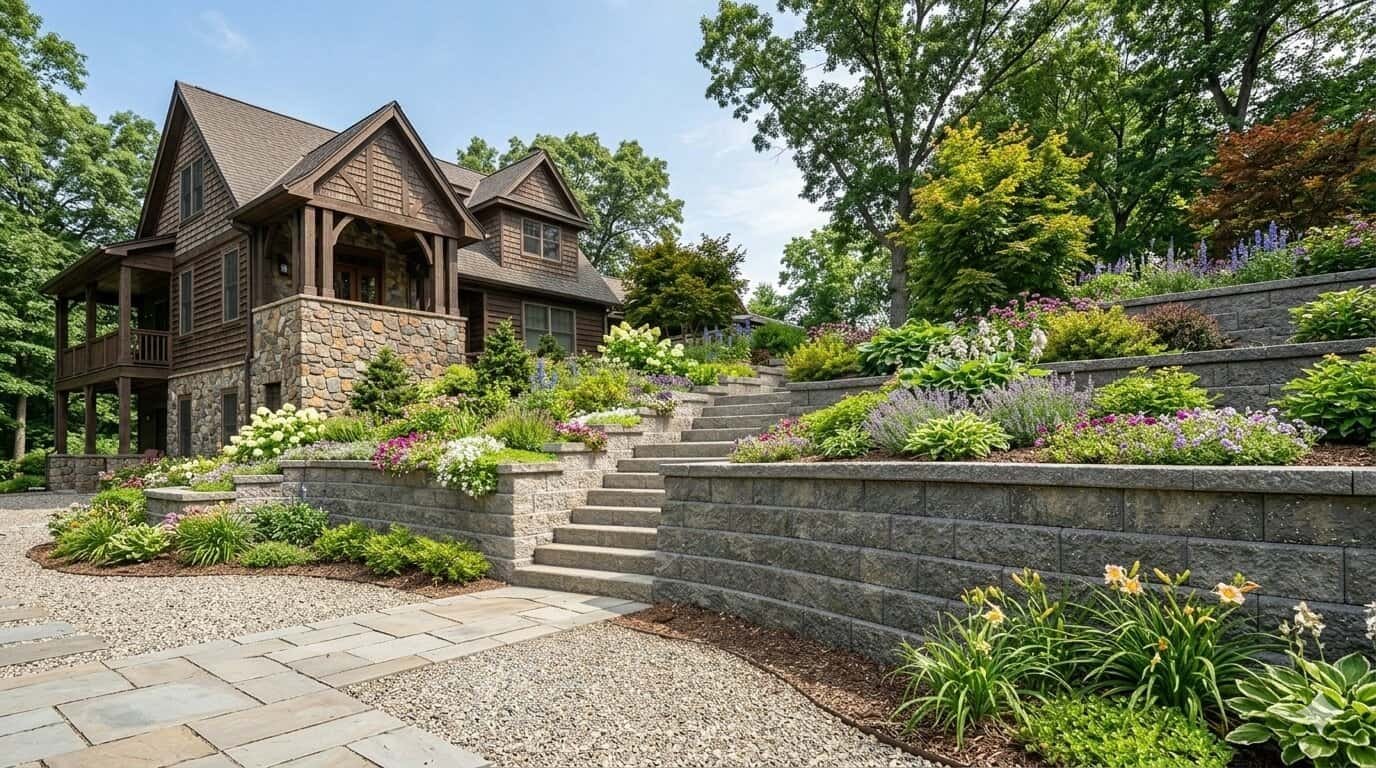
Why St. Louis Homes Need Retaining Walls
St. Louis sits on some of the most challenging soil in the Midwest. Missouri’s clay-heavy soil expands when wet and contracts when dry — creating constant movement that pushes against walls, foundations, and hardscapes. Add in the region’s freeze-thaw cycles, heavy spring rainfall, and sloped terrain across neighborhoods like Kirkwood, Chesterfield, and Ladue, and you have the perfect recipe for erosion, foundation damage, and unusable yard space.
A well-engineered retaining wall does four things for St. Louis homeowners:
- Stops soil erosion and slope failure
- Redirects water away from your foundation
- Creates flat, usable outdoor living space
- Protects driveways, patios, and landscaping from shifting ground
Without one, water and soil movement will continue to damage your property season after season.
Concrete Block Retaining Walls
What Is a Concrete Block Wall?
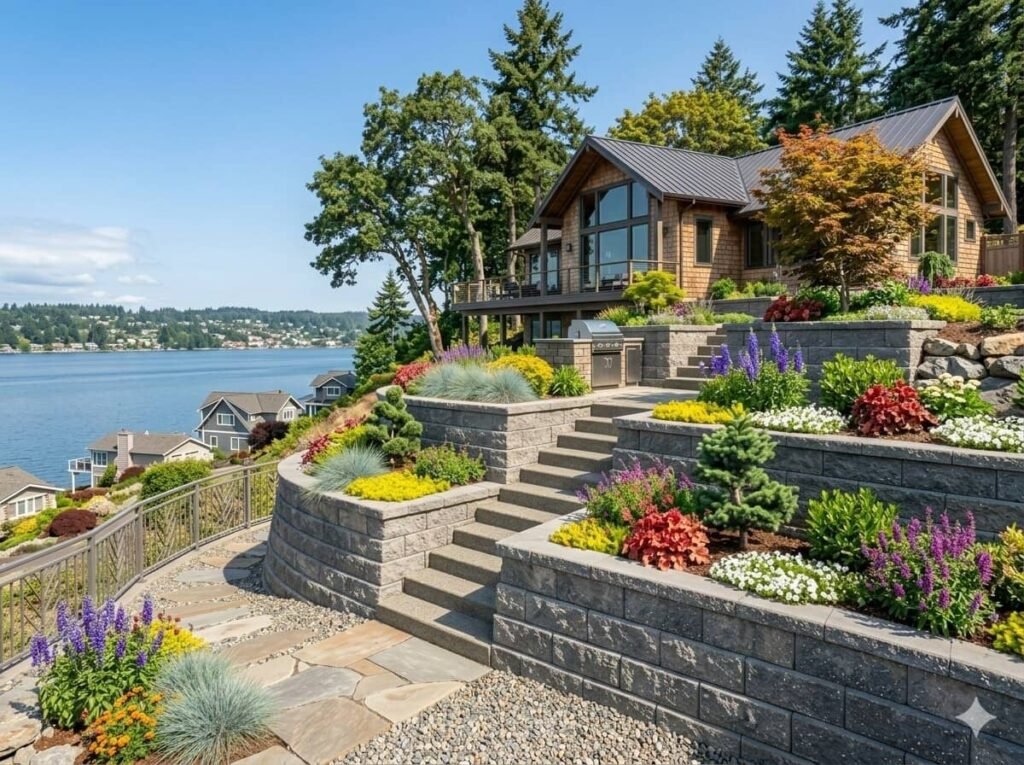
Concrete block retaining walls — also called segmental block walls or modular block walls — are built using interlocking manufactured concrete blocks stacked in a precise pattern. Each block locks into the one below it, creating a strong, unified structure without requiring mortar.
This is the most common retaining wall type installed across St. Louis, and for good reason.
Best For St. Louis Properties
Concrete block walls perform exceptionally well in Missouri’s climate. The interlocking system allows for slight movement during freeze-thaw cycles without cracking — a major advantage over poured concrete in St. Louis winters. They work well for walls up to 4 feet tall without engineering, and can be reinforced with geogrid for taller walls.
Average Cost in St. Louis
$25 – $45 per square foot installed, depending on wall height, block type, and drainage requirements.
Pros
- Durable and long-lasting — 50+ years with proper drainage
- Available in many colors, textures, and styles
- Handles freeze-thaw cycles well
- Can be built to almost any height with geogrid reinforcement
- Relatively fast installation
Cons
- Not ideal for very large structural walls without engineering
- Requires proper base preparation and drainage — shortcuts will cause failure
Natural Stone Retaining Walls
What Is a Natural Stone Wall?
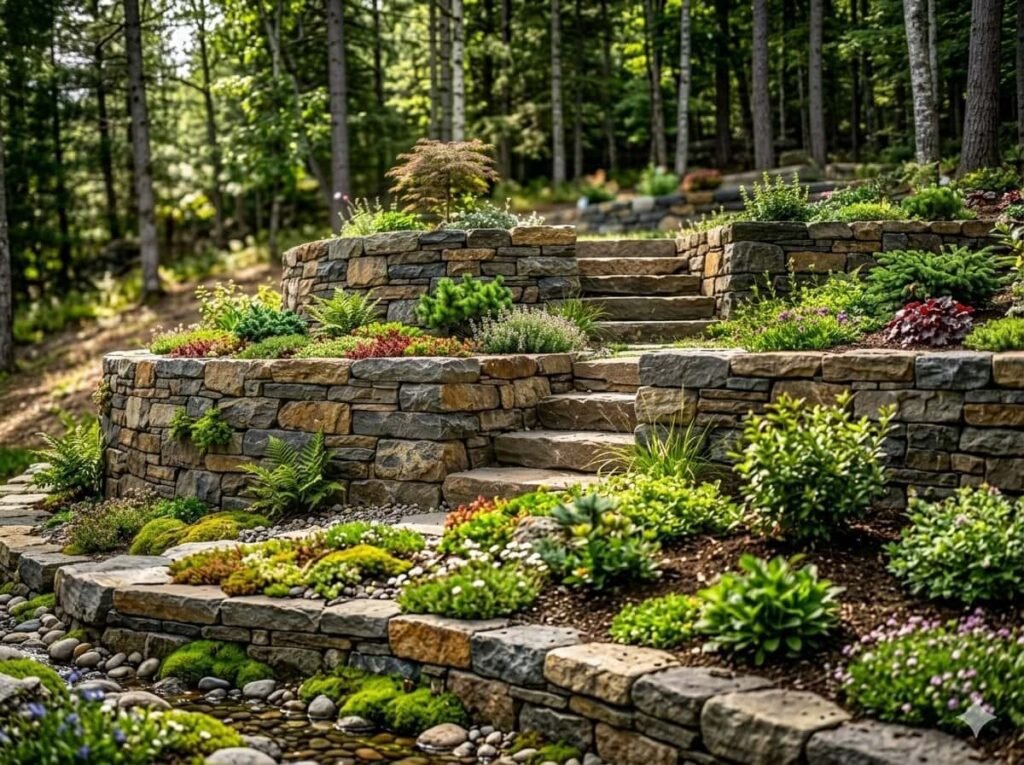
Natural stone retaining walls are built using locally sourced or imported stone — limestone, fieldstone, bluestone, or granite — either dry-stacked or mortared together. These walls have a timeless, organic appearance that blends beautifully with St. Louis landscapes.
Best For St. Louis Properties
Natural stone is an excellent choice for homeowners in historic St. Louis neighborhoods or properties where aesthetics are a top priority. Dry-stacked stone walls also allow water to drain naturally through the gaps — reducing hydrostatic pressure buildup, which is a common cause of wall failure in Missouri’s rainy seasons.
Average Cost in St. Louis
$35 – $65 per square foot installed, depending on stone type and wall complexity.
Pros
- Extremely durable — can last 100+ years when properly built
- Beautiful, natural appearance that increases curb appeal
- Dry-stack design allows natural drainage
- Environmentally friendly material choice
Cons
- More expensive than concrete block
- Requires skilled craftsmanship — not a DIY project
- Heavier material means more complex installation
Timber and Railroad Tie Retaining Walls
What Is a Timber Wall?
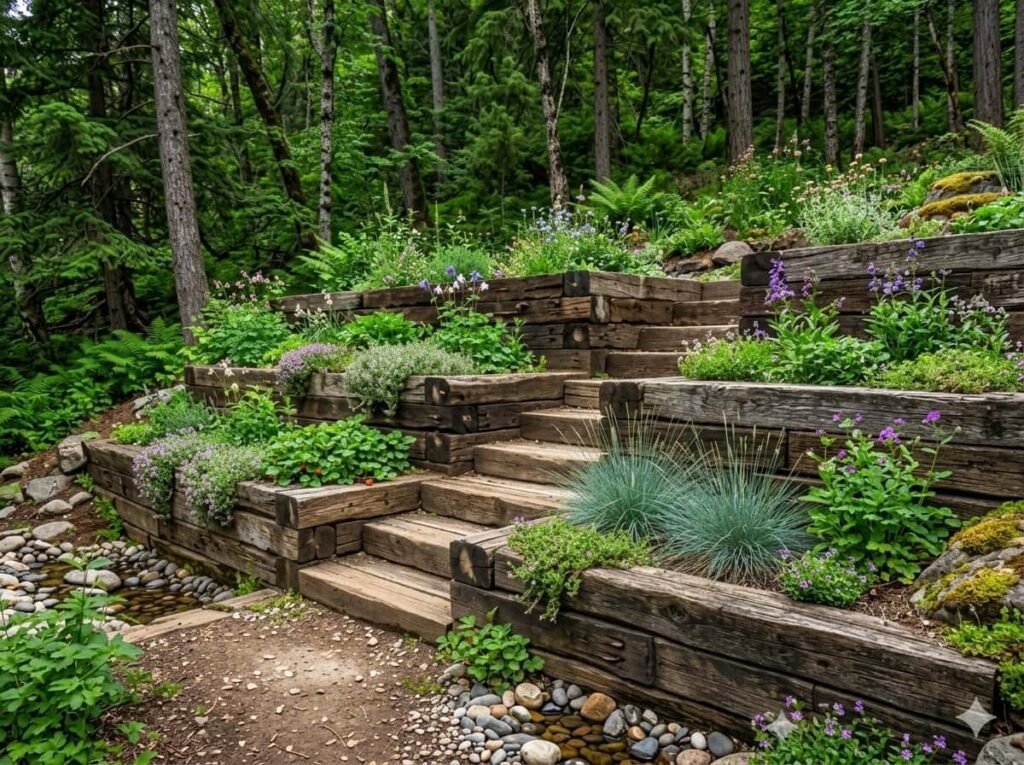
Timber retaining walls are built using pressure-treated lumber or recycled railroad ties stacked horizontally and anchored with deadman tie-backs driven into the slope. They are one of the most affordable retaining wall options available.
Best For St. Louis Properties
Timber walls work well for low walls — typically 3 feet or under — in garden areas, landscaping beds, or low-traffic areas of the yard. They are not recommended for high-load applications or areas with poor drainage in St. Louis, as moisture accelerates wood decay.
Average Cost in St. Louis
$15 – $25 per square foot installed — lowest upfront cost but higher long-term replacement costs.
Pros
- Most affordable retaining wall option
- Easy to install for smaller projects
- Natural wood appearance suits garden settings
Cons
- Shortest lifespan — typically 10 to 20 years
- Wood rots, warps, and degrades in Missouri’s wet climate
- Not suitable for tall walls or structural applications
Poured Concrete Retaining Walls
What Is a Poured Concrete Wall?
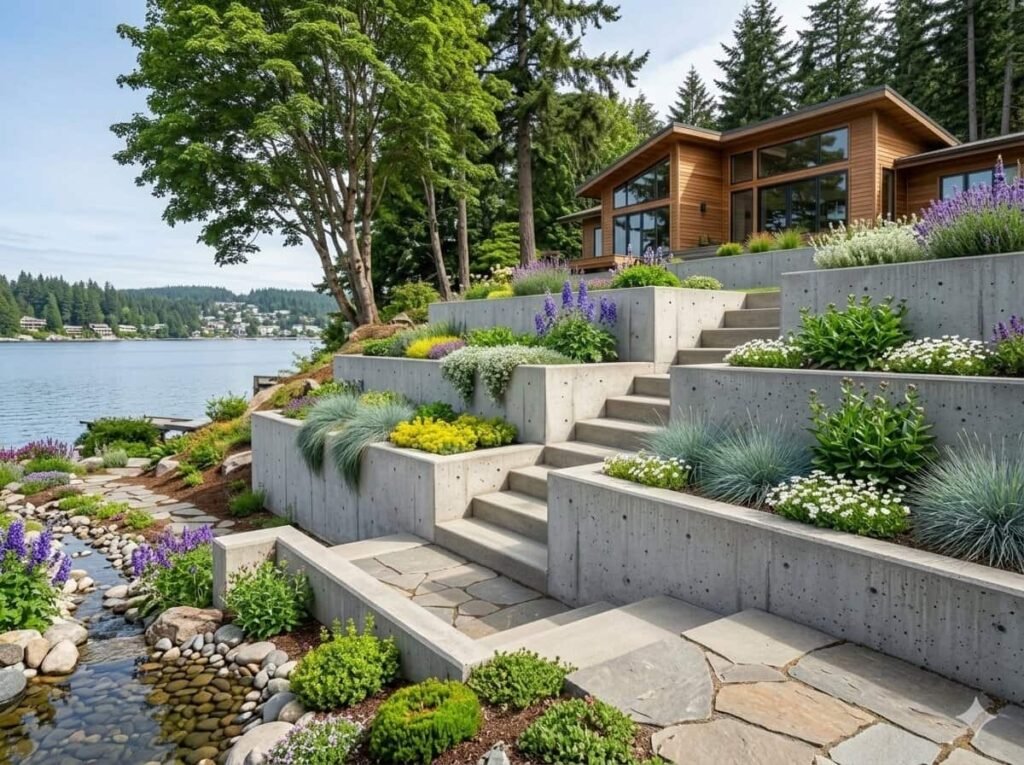
Poured concrete retaining walls — also called cast-in-place concrete walls — are formed using wood or steel molds and filled with reinforced concrete on-site. Once cured, they create a single solid structure with exceptional strength.
Best For St. Louis Properties
Poured concrete walls are the best choice for commercial projects, large structural walls, or situations requiring maximum load-bearing strength. They are commonly used in St. Louis for retaining walls adjacent to parking lots, commercial developments, and steep hillside stabilization projects.
Average Cost in St. Louis
$30 – $55 per square foot installed, depending on wall height, reinforcement requirements, and access.
Pros
- Extremely strong — handles heavy loads and high soil pressure
- Long lifespan when properly reinforced and sealed
- Can be formed into custom shapes
- Ideal for commercial and large residential projects
Cons
- More expensive than block walls
- Cracking is possible in St. Louis freeze-thaw cycles if not properly sealed
- Requires professional forming and finishing
- Less visually attractive without additional finish work
Gabion Retaining Walls
What Is a Gabion Wall?
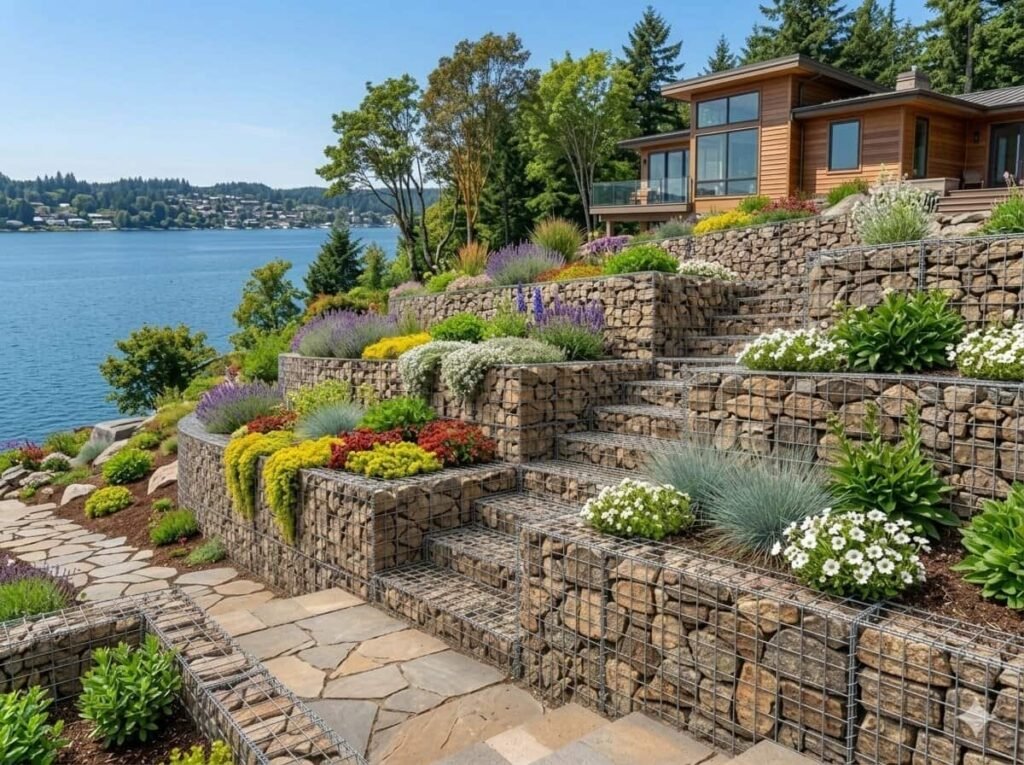
Gabion walls are built using wire mesh cages filled with rocks, gravel, or recycled concrete. The cages are stacked to form a gravity wall — meaning their own weight holds back the soil rather than structural engineering alone.
Best For St. Louis Properties
Gabion walls are an excellent drainage-friendly option for St. Louis properties. Water flows freely through the rock-filled cages, eliminating hydrostatic pressure — one of the leading causes of retaining wall failure. They also work well on slopes where a natural, industrial, or contemporary aesthetic is desired.
Average Cost in St. Louis
$20 – $40 per square foot installed, depending on stone fill material and wall dimensions.
Pros
- Exceptional natural drainage — no hydrostatic pressure buildup
- Unique industrial or natural visual appearance
- Environmentally friendly — can use recycled materials
- Flexible structure handles ground movement well
- Very durable when properly installed
Cons
- Can look too industrial for some residential settings
- Wire mesh can corrode over time in wet environments
- Requires significant space — walls are thick by design
Segmental Retaining Walls
What Is a Segmental Wall?
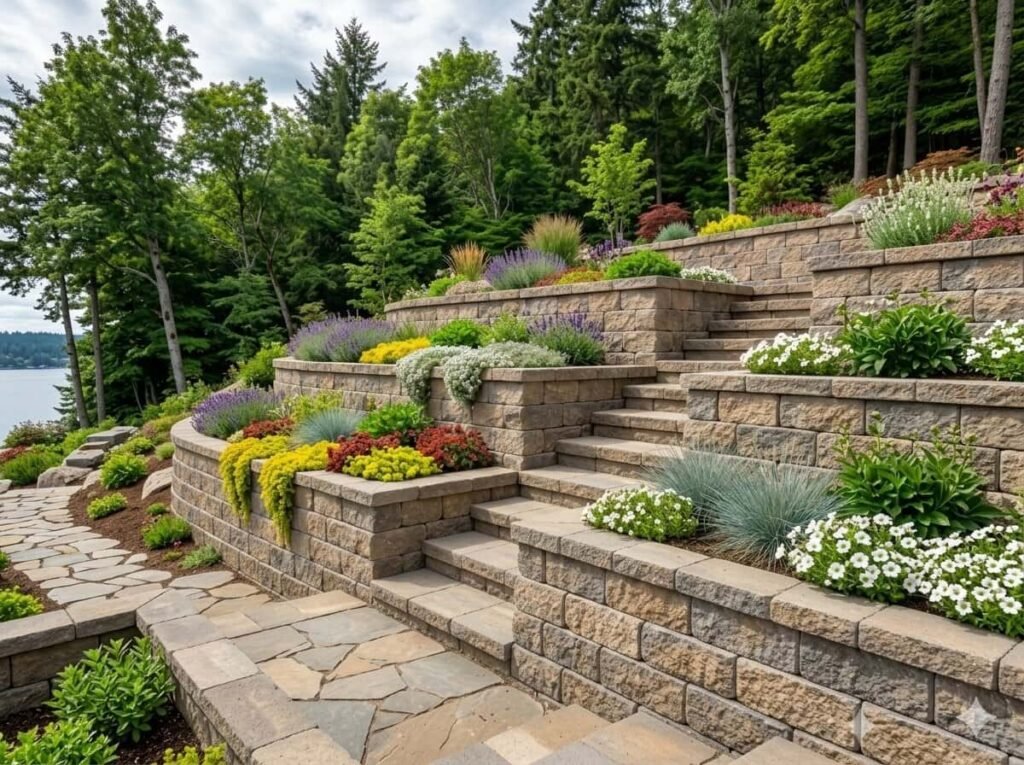
Segmental retaining walls are engineered wall systems built using manufactured concrete units designed specifically for structural retaining applications. Unlike standard concrete block, segmental walls are designed and engineered to strict NCMA standards — making them suitable for taller, more demanding applications.
Best For St. Louis Properties
Segmental retaining walls are ideal for St. Louis properties with significant slopes, large elevation changes, or situations where a wall must hold back substantial soil loads. They are commonly used in multi-tier landscape designs across Chesterfield, Ballwin, and other hillside neighborhoods in the St. Louis Metro Area.
Average Cost in St. Louis
$35 – $60 per square foot installed, depending on wall height, geogrid requirements, and engineering.
Pros
- Engineered for structural performance — suitable for tall walls
- Geogrid reinforcement allows walls to handle heavy soil loads
- Wide variety of textures and finishes available
- Long lifespan — 50 to 75 years with proper drainage
- Meets ICPI and NCMA installation standards
Cons
- Requires professional engineering for walls over 4 feet
- Higher cost than standard concrete block
- Installation requires experienced contractors familiar with geogrid systems
Which Retaining Wall Type Is Best for You?
| Wall Type | Best For | Lifespan | Cost Per Sq Ft |
|---|---|---|---|
🧱 Concrete Block |
Residential, versatile use | 50+ years | $25 – $45 |
🪨 Natural Stone |
Aesthetics, historic homes | 100+ years | $35 – $65 |
🪵 Timber |
Small garden walls | 10 – 20 years | $15 – $25 |
🏗️ Poured Concrete |
Commercial, heavy load | 50+ years | $30 – $55 |
🪤 Gabion |
Drainage-heavy areas | 30 – 50 years | $20 – $40 |
⚙️ Segmental |
Tall structural walls | 50 – 75 years | $35 – $60 |
On a budget? Timber is cheapest upfront but costs more long-term. Concrete block offers the best value overall.
Want the best aesthetics? Natural stone is unmatched for curb appeal and longevity.
Need a structural solution? Poured concrete or segmental walls are your best options.
A retaining wall rarely stands alone — most St. Louis homeowners combine it with patios, walkways, garden beds, and lawn upgrades. If you’re planning a full outdoor transformation, exploring complete landscaping and hardscaping services alongside your wall project can save time, reduce costs, and deliver a more cohesive finished result.
St. Louis Soil and Climate — What You Must Know Before Choosing
Before choosing a retaining wall material, every St. Louis homeowner should understand two key factors that affect wall performance:
Missouri Clay Soil expands significantly when it absorbs water and shrinks when it dries out. This constant movement creates lateral pressure against retaining walls — making proper geogrid reinforcement and base preparation essential regardless of which material you choose.
Freeze-Thaw Cycles cause water trapped behind walls to freeze, expand, and push against the wall structure. Without proper drainage systems — including gravel backfill, perforated drain pipes, and weep holes — even the strongest wall will eventually fail under this pressure.
This is why every retaining wall built in St. Louis should include engineered drainage as a standard part of the installation — not an optional add-on. If your property already has standing water, soggy grass, or runoff issues, it’s worth addressing these with proper drainage solutions before or alongside your retaining wall project — fixing drainage early prevents wall failure down the line.
How Much Does a Retaining Wall Cost in St. Louis?
Retaining wall cost in St. Louis depends on several factors:
- Wall height and length — taller walls require more engineering and material
- Material choice — timber is cheapest, natural stone is most expensive
- Drainage requirements — French drains, gravel backfill, and perforated pipes add cost but are essential
- Site access — difficult access increases labor time and equipment costs
- Engineering requirements — walls over 4 feet typically require engineering in St. Louis
As a general guide, most residential retaining walls in St. Louis range from $3,000 to $25,000 depending on size and material. Always request a written, itemized estimate before committing to any contractor.
Why You Should Hire a Professional Retaining Wall Contractor in St. Louis?
In St. Louis, retaining walls over 4 feet typically require a building permit and an engineer’s design. Attempting to build a wall without proper permits, engineering, or drainage planning can result in wall failure, foundation damage, and costly repairs down the line.
A professional retaining wall contractor will handle site evaluation, soil analysis, drainage planning, geogrid reinforcement, and permit coordination — ensuring your wall is built to last for decades, not just a few seasons.
At STL Retaining Wall Install Pros, we specialize in designing and building engineered retaining walls across St. Louis, Chesterfield, Ballwin, Kirkwood, Ladue, Clayton, and surrounding areas. Every wall we build includes proper base preparation, drainage systems, and geogrid reinforcement — because a retaining wall installation done right the first time saves you from expensive repairs years down the line. Many of our projects also include complete landscaping and hardscaping work — from grading and planting to patios and walkways — so your entire outdoor space is finished to the same high standard.
Frequently Asked Questions
Timber walls have the lowest upfront cost at $15–$25 per square foot, but they require replacement every 10–20 years. Concrete block offers better long-term value.
Natural stone walls, when properly built, can last 100 years or more. Concrete block and segmental walls also offer 50+ year lifespans with proper drainage.
Yes — in most St. Louis City and County municipalities, walls over 4 feet require a building permit and an engineer's design. Your contractor should handle this process.
Most retaining wall footings in St. Louis should be buried at least 6–12 inches below grade, depending on wall height and soil conditions. Frost depth in Missouri is approximately 18–24 inches for structural footings.
Small timber or concrete block walls under 3 feet can be DIY projects, but anything taller should be handled by a professional — especially given St. Louis clay soil conditions and permit requirements.