
Retaining walls play an important role in landscape stability and drainage management. In areas like St. Louis, where properties often include slopes and clay soil conditions, a properly built retaining wall helps control soil movement and supports outdoor spaces.
At STL Retaining Wall Pros, we provide professional retaining wall installation for homeowners, builders, and property managers across St. Louis, Missouri. Our team designs and builds retaining walls using proven construction methods and materials suited to local soil and climate conditions.
If you’re searching online for retaining wall installation near me, contact our team for a free on-site estimate and professional site evaluation.
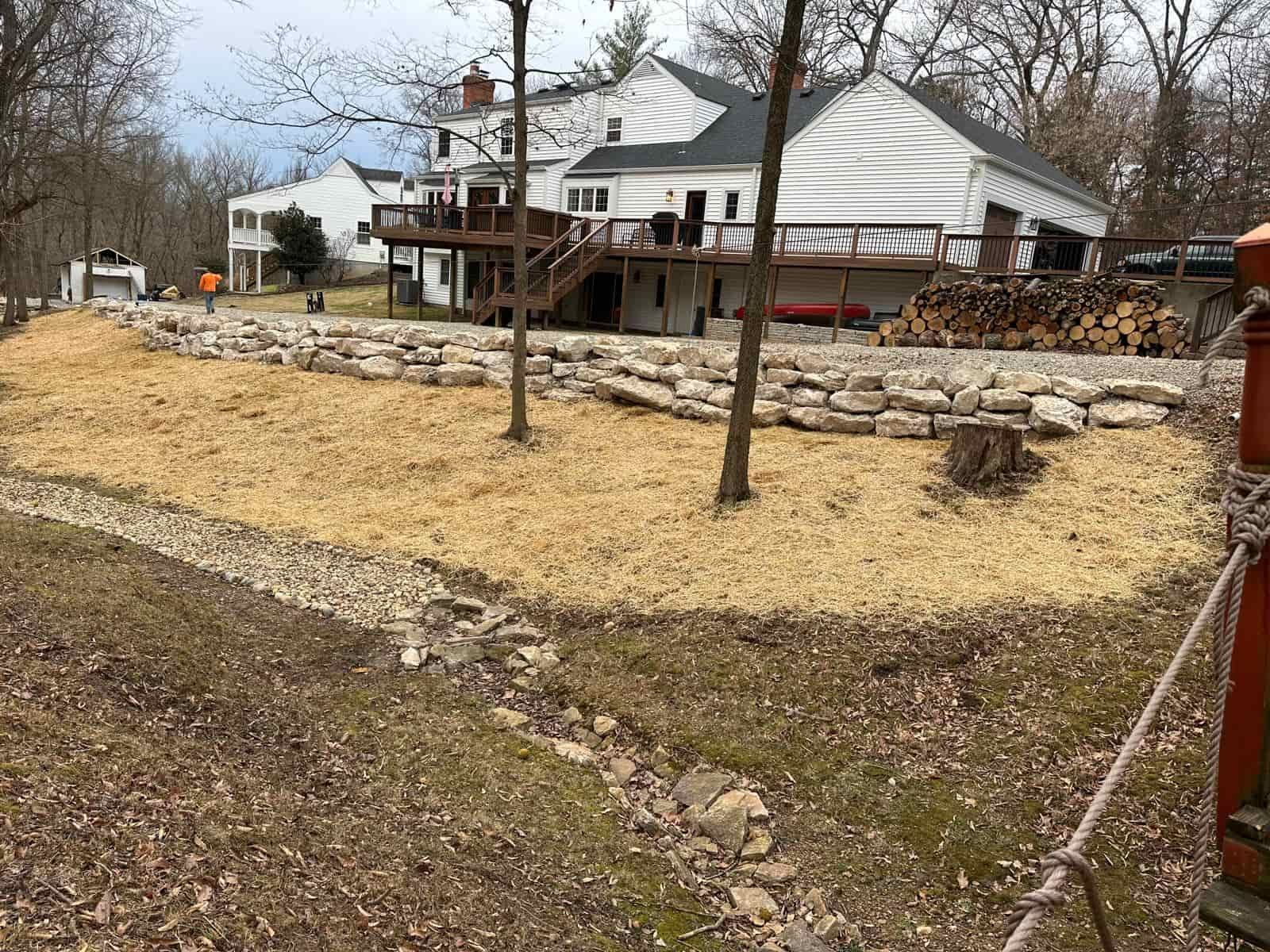
Benefits of Installing a Retaining Wall in St. Louis
A properly engineered retaining wall offers long-term functional and visual advantages:
- Prevents erosion, soil shifting & slope failures
- Expands usable yard space for patios, gardens or seating areas
- Protects foundations, driveways & landscaping
- Adds beauty and boosts property value
- Supports proper water drainage & reduces flooding risks
- Defines outdoor living areas with structure and style
Every wall is built with proper geogrid reinforcement, compacted base preparation, and advanced drainage systems to prevent movement, bowing, or collapse.
Our certified installers follow manufacturer guidelines, municipal codes, and ICPI/NCMA industry standards, ensuring premium quality on every installation.
We install high-performance materials such as:
- Concrete retaining wall blocks
- Paver & modular block retaining systems
- Armour stone & natural stone retaining walls
- Commercial-grade concrete retaining walls
Our retaining walls are engineered to withstand clay soils, heavy storms, slope pressure, and soil expansion — conditions common throughout St. Louis.
What Is a Retaining Wall and Why Is It Important?
A retaining wall is a structural wall designed to hold soil in place when there is a change in elevation. These walls are commonly used in landscaping, hillside properties, and areas where ground levels need support.
In simple terms, a retaining wall prevents soil from shifting while creating usable outdoor space.
In St. Louis, retaining walls are especially useful because of Missouri clay soil. Clay expands when it absorbs water and contracts when it dries. This soil movement can cause pressure behind structures. A properly designed wall manages that pressure through structural support and a retaining wall drainage system.
Typical reasons homeowners install retaining walls include:
Stabilizing slopes
Creating level yard areas
Preventing soil movement
Supporting patios or driveways
Improving landscape design
Professional retaining wall construction ensures the wall remains structurally stable over time.
Why St. Louis Homeowners Trust Us for Retaining Wall Installation
Homeowners choose us because we deliver what other installers promise but rarely achieve:
✔ Engineered for Safety
Every wall is built with proper geogrid reinforcement, compacted base preparation, and advanced drainage systems to prevent movement, bowing, or collapse.
✔ Superior Craftsmanship
Our certified installers follow manufacturer guidelines, municipal codes, and ICPI/NCMA industry standards, ensuring premium quality on every installation.
✔ Materials That Last
We install high-performance materials such as:
- Concrete retaining wall blocks
- Paver & modular block retaining systems
- Armour stone & natural stone retaining walls
- Commercial-grade concrete retaining walls
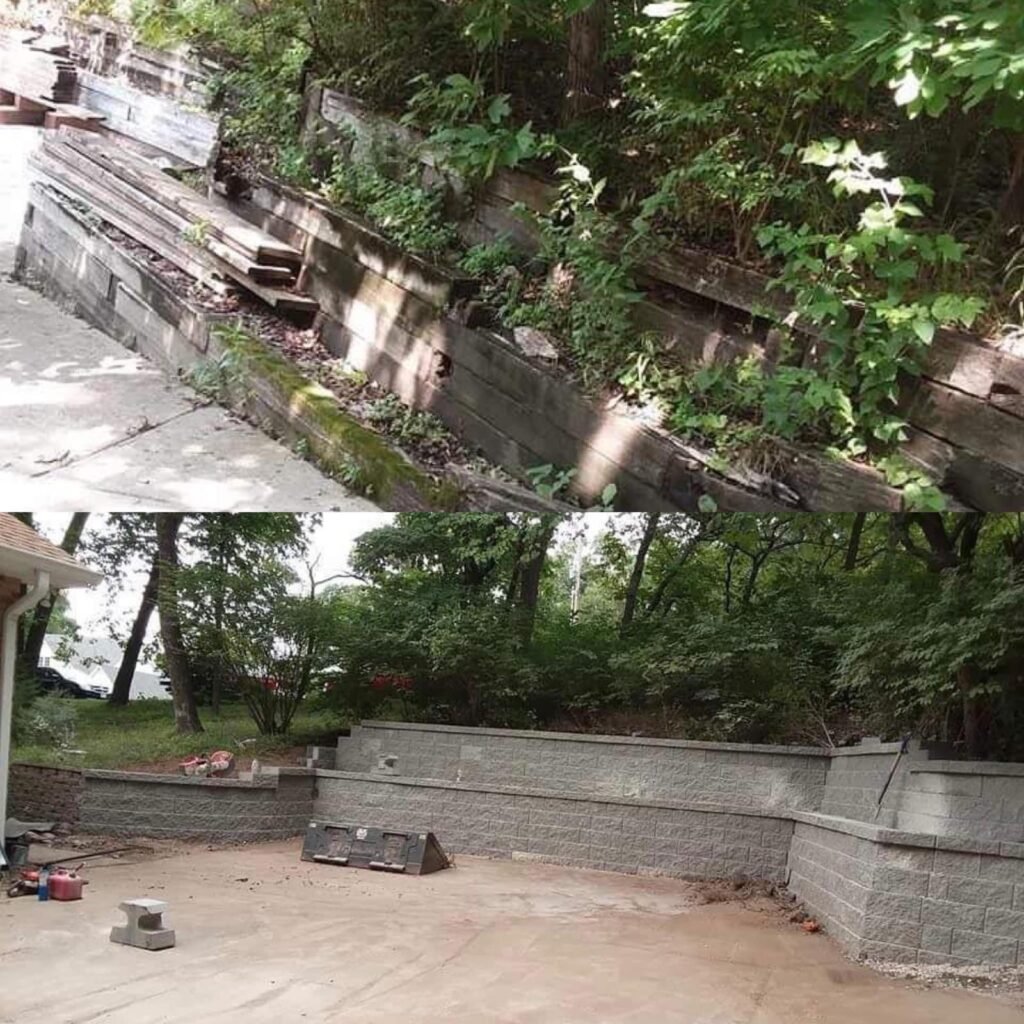
✔ St. Louis Climate-Ready Design
Our retaining walls are engineered to withstand clay soils, heavy storms, slope pressure, and soil expansion — conditions common throughout St. Louis.
Types of Retaining Walls We Build
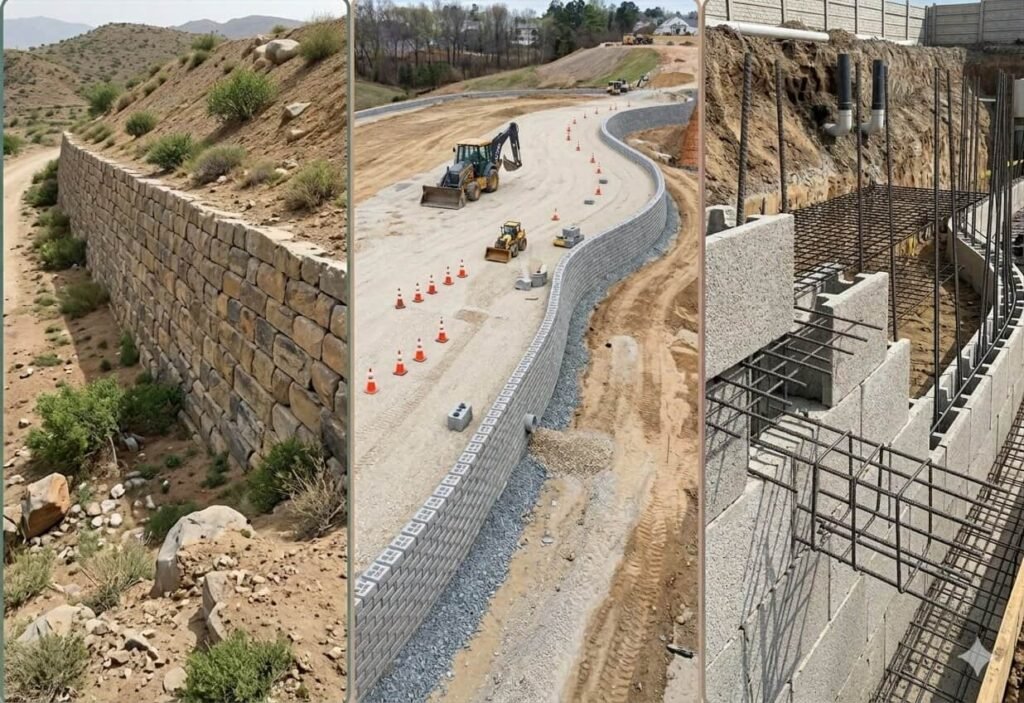
Gravity Retaining Wall
A gravity retaining wall relies on its weight to resist soil pressure. These walls are commonly built with stone, concrete, or large retaining wall blocks.
They are suitable for shorter walls where soil pressure is moderate.
Segmental Retaining Wall
A segmental retaining wall uses interlocking block systems. These walls allow flexibility and controlled drainage, making them suitable for residential landscaping.
Reinforced Retaining Wall Systems
For taller walls, reinforcement systems may be used. These systems include structural reinforcement materials behind the wall to increase load resistance.
Our Retaining Wall Installation Services in St. Louis
We offer full-service retaining wall construction for both residential and commercial properties:
Our primary service is complete retaining wall construction for residential and commercial properties. We evaluate soil conditions, slope angles, drainage requirements, and structural load before beginning construction.
Every wall is built according to local engineering standards and municipal regulations.
A concrete retaining wall is often used for structural applications where high soil pressure is present. Poured concrete walls provide long-term strength and stability, making them suitable for large retaining structures and foundation support.
Concrete walls are commonly used in commercial landscaping and large residential projects.
A stone retaining wall offers natural appearance and durability. Natural stone walls blend well with landscaping and garden features while providing reliable soil retention.
Stone retaining walls are often used in residential landscaping projects where aesthetics and structural support are both important.
Block retaining walls are one of the most common systems used today. These walls use interlocking retaining wall blocks that are designed for strength and stability.
Segmental systems allow for controlled installation and drainage management. This method is commonly used for patios, yards, and landscaping structures.
We fix bowing walls, drainage failures, leaning blocks, soil pressure damage, and incorrect DIY installations.
Drainage-focused, engineered walls designed to stop erosion and reclaim your outdoor space.
A cinder block retaining wall is sometimes used for structural landscaping applications where reinforced masonry is required. Proper reinforcement and drainage are essential when using this type of wall.
Retaining Wall Installation Cost in St. Louis
Many homeowners ask about retaining wall installation cost.
Typical price ranges include:
| Wall Size | Height Range | Estimated Cost |
|---|---|---|
| Small Retaining Wall | Under 3 feet | $2,000 – $5,000 |
| Medium Retaining Wall | 3 – 6 feet | $5,000 – $15,000 |
| Large Structural Wall | 6 feet and above | $15,000 – $40,000+ |
Costs depend on:
Wall height and length
Soil conditions
Drainage requirements
Material type
Accessibility
If you are researching how much cost retaining wall installation, the best approach is an on-site estimate.
Retaining Wall Repair and Replacement
Older retaining walls may require retaining wall repair or full retaining wall replacement if structural movement occurs.
Common issues include:
Drainage problems
Soil pressure damage
Structural cracks
Foundation shifting
Professional evaluation determines whether repair or replacement is required.
Aftercare Instructions for Retaining Walls
Proper maintenance helps extend the life of your retaining wall.
After installation:
Keep drainage outlets clear
Avoid placing heavy loads near the top of the wall
Monitor water flow after heavy rainfall
Maintain landscaping behind the wall
Missouri’s seasonal rainfall and clay soil movement make drainage maintenance important.
Frequently Asked Questions
Most St. Louis homeowners pay $4,000 to $14,000 for a professionally installed retaining wall. Cost depends on wall height, material choice, drainage requirements, and site access. Per square foot, expect $35 to $65 installed.
Yes, for walls over 4 feet in height. Both St. Louis City and St. Louis County require permits and typically engineered drawings for walls at this height. Check with your local building department before starting any project.
Segmental concrete block with a proper gravel drainage zone and perforated pipe performs best in St. Louis clay conditions. The gravel layer prevents clay from holding water against the back of the wall, and the flexible block system handles frost movement better than rigid concrete.
A standard 20 to 30-foot residential wall takes 2 to 3 days for a professional crew. Larger projects or those requiring permits and inspections can take 1 to 2 weeks from start to finish.
Yes. On sloped ground, the base trench is dug in level, stepped increments rather than following the slope angle. This keeps each section of the base level and stable. Each step should correspond to one full block height.